Table of Content
If you want to know if Wawa will charge you to plug in your Tesla and charge it up, here are some things to keep in mind. Updated the Cost to Charge an Electric Car at Home section with monthly charge information. Updated the Electric Car Charging Station Costs by Type section with a longer introduction, additional column in the table, and longer subsections.
Tesla announced a higher-capacity "Megacharger" along with the unveiling of a prototype for its Tesla Semi, a semi-trailer truck, in November 2017. The solar-assisted Megacharger Network stations would charge the semi trucks with 400 miles of charge in 30 minutes, out of the total capacity of 500 miles in the battery pack. To accomplish this, analysts estimated it would likely have a charge output level of over one megawatt.
Tesla charging station expansion
On Tesla’s least efficient vehicle, the Model X Plaid, with an EPA rating of 370 wH/mile, that 4,000 kWh credit should allow you to travel just about 10,800 miles for free. But on a Tesla Model 3 RWD, with an EPA rating of 250 wH/mile, that 4,000 kWH credit will allow you to travel around 16,000 miles. Of course, actual distance will vary based on things like weather and driving style.
Drivers prefer a home charging point because it is faster and has built-in safety features. Electric vehicles can now travel much further than previously, thanks to the addition of EV charging stations. Most trips will necessitate multiple charging points for your vehicle.
Cost to Install Vehicle Charging Station
Despite the presence of a more fuel-efficient vehicle, the financial gap persists. You may find that charging networks offer membership programs in order to reduce your recharge costs. EV charging stations are devices that are used to charge electric vehicles. There are a few different types of charging stations, but the most common type is Level 2 EVSE, which uses 240 volts AC to charge the vehicle.

However, it also comes with a shorter cable, which limits your car’s position. The ChargePoint costs more and may require an adapter, which can cost extra depending on where you purchase it. Level 2 charging stations are most common for electric vehicle owners and cost between $600 to $1,200.
The Costs Of Installing A Home Charger For Your Tesla
This can be helpful for customers who want to conserve energy, as they can avoid being charged a higher rate for their electric use. Tesla’s charging pricing is also more affordable than many traditional automotive charging systems. Charge efficiency is about how much energy your battery packs store up after taking the input of amps, volts and other factors like temperature. That’s why Tesla cars require low amp rates if they’re going to maintain optimal performance levels. Tesla recommends that owners charge their vehicle at home where they do not need to pay an electrician for installing a cable.
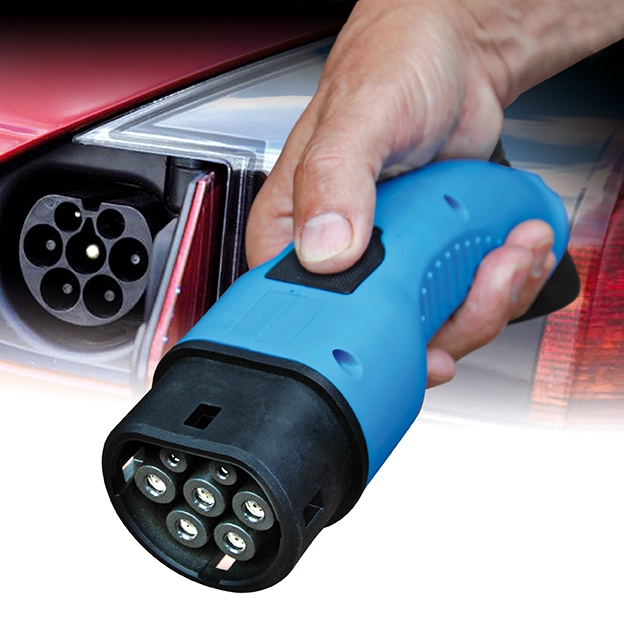
To use a Level 2 EVSE, the driver plugs the station into an outlet and then plugs their vehicle into the station. Licensed electricians install electric car charging stations by making any necessary upgrades to the home’s electrical service panel and wiring. Tesla and Chevrolet certify electricians who are specially trained to install their Level 2 charging stations. An electric car charging point costs $350 to $900 on average, depending on the brand and features. The best EV charging station brands are Juicebox Pro, Webasto TurboCord, ClipperCreek, and ChargePoint.
Can You Plug An Electric Car Into A Regular Outlet?
These are the time periods during the day when people are usually at work or sleeping so electricity usage is down. Even if you are on the higher end of that range and you are paying near $50 it can still be significantly less than gasoline-fueled cars. Even with this cost deficit, you have to think about other factors that add to the overall cost of charging your vehicle at home. In this article, we will discuss factors that might help you save money and give you a better idea of how much it will really cost you to charge your Tesla at home. You can also take advantage of the “smart features” to track power usage, energy cost, and charge two electric cars on one outlet.

Level 3, 480-volt DC fast chargers are also becoming more common and can charge some electric cars in as little as 30 minutes. The cost of electric car charging stations varies depending on the type of charger, the location, and the electricity rate. Level 1 chargers are the least expensive, while Level 2 and DC fast chargers are more expensive. Electric vehicles are becoming more and more common, thanks to their cost and energy savings. If you want to save on fuel bills and minimize pollution, an EV that runs off a battery may be a smart investment. You can charge the battery at home or a public/commercial charging station.
However, if you move your Tesla within five minutes of reaching a full charge, Tesla will waive the idle fee. There are a few easy ways to find Tesla charging stations including Tesla’s website, your Tesla app, and your car’s navigation system. Teslas have a unique charging port and charger, but you can also use a J1772 adapter to charge at most EV charging stations. The cost to charge a Tesla at a Supercharger depends on where you are charging as the electricity rates at each Supercharger station vary.
At some public charging stations where electric cars can be charged, the price can be as high as 26 cents per minute. Depending on how long you and your car stay at the station, you may have to pay an extra $10 to $15. Electric car charging stations can be installed both indoors and outdoors.
TeslaTesla vehicles have traditionally been charged using one of two methods.
TOU rates are lower than the regular rates during off-peak hours, so Tesla owners can save money by charging their cars during those hours. The chart below shows the off-peak hours for each day of the week. Tesla cars are popular for their environmental, economic, performance, and practical benefits. Our Tesla charging cost calculator makes it easy to see how Tesla electric vehicle ownership can save you money every month. Owning an electric vehicle means finding a good charging strategy.
2012 saw six initial Supercharger stations around the United States, located at strategic points on the Boston-to-Washington and Los Angeles-to-San Francisco highway corridors. By mid-July 2013, 15 stations were open across the United States, with the number expected to nearly double by the end of the summer. The stations were developed and mass constructed in cooperation with Black & Veatch. Supercharging stations were available in Canada along Ontario Highway 401 and Quebec Autoroute 20 corridor between Toronto and Montreal by 2014. A few of the Tesla supercharging stations use solar panels to offset energy use and provide shade.

A second Megacharger was permitted for construction at a Pepsi facility in Modesto, California, in late 2021. Tesla Supercharger stations are also available at highway rest areas. These are placed at a rest area at the Bundesautobahn 9 in Germany at the Münchberg / Nord Autohof exit.


No comments:
Post a Comment