Table Of Content
- Noticeable hair loss in women can be deeply distressing. Here are some medical treatments that may help.
- Tick season is expanding: Protect yourself against Lyme disease
- Addressing shortfalls through diet and supplements: Does it help hair growth?
- Oral Minoxidil for Hair Loss: 9 Things You Need to Know
- Potential Causes of Hair Loss and Baldness
- Androgenetic Alopecia: A Guide to Pattern Hair Loss

Androgens are important for normal male sexual development before birth and during puberty. Androgens also have other important functions in both males and females, such as regulating hair growth and sex drive. According to Healthline, other common types of alopecia include traction alopecia, telogen effluvium, alopecia areata, central centrifugal cicatricial alopecia (CCCA), and lichen planopilaris (LPP). According to Agbai, genetics, hormonal shifts, stress, underlying medical conditions, nutritional deficiencies, and scalp inflammation are notable factors.
Noticeable hair loss in women can be deeply distressing. Here are some medical treatments that may help.
If requested by clinicians, compounding pharmacies may formulate dutasteride topical solutions, although literature is sparse regarding its utility in treating androgenetic alopecia. Although androgenetic alopecia is a chronic and progressive condition, early intervention and appropriate management strategies can help decrease hair loss over time, potentially leading to improved outcomes for the patient. The British Association of Dermatologists have produced patient information leaflets about male and female pattern hair loss. Although researchers suspect that several genes play a role in Androgenetic Alopecia, however, to date, only changes in one gene, the androgen receptor gene, have been linked to development of Androgenetic Alopecia. Androgen receptors allow the body to respond appropriately to dihydrotestosterone and other androgens.
Tick season is expanding: Protect yourself against Lyme disease
For men, potential treatments include oral finasteride and/or topical minoxidil solution or foam, and for women topical minoxidil solution or foam. Hair transplantation can be used to improve the appearance of Androgenetic Alopecia (click here for more information about hair transplants). Male pattern baldness is a type of hair loss that’s more gradual than telogen effluvium. Without medications or treatment, hair loss due to male pattern baldness is permanent. When it occurs in young men with no family history, the physician should question the patient about use of anabolic steroids and other drugs. Other laboratory testing in women with suspected androgenetic alopecia can include iron, ferritin, vitamin D, and thyroid function testing if indicated by history.
Addressing shortfalls through diet and supplements: Does it help hair growth?
Losing my hair made me miserable. Now I’m as bald as an egg, I couldn’t be happier - The Guardian
Losing my hair made me miserable. Now I’m as bald as an egg, I couldn’t be happier.
Posted: Tue, 16 Apr 2024 07:00:00 GMT [source]
The presence of exclamation point hairs, pitted nails, or a history of periodic regrowth or tapered fractures noted on hair counts suggests the diagnosis of diffuse alopecia areata. It is important to manage expectations when seeking treatment, as the aim is to slow or stop the progression of hair loss rather than to promote hair regrowth. Results are variable, and it is not possible to predict who may or may not benefit from treatment. FPHL can affect women in any age group, but it occurs more commonly after menopause. The hair loss process is not constant and usually occurs in fits and bursts.
New Alopecia Areata Treatment Aims To Help Adults and Adolescents - Yale Medicine
New Alopecia Areata Treatment Aims To Help Adults and Adolescents.
Posted: Thu, 06 Jul 2023 07:00:00 GMT [source]
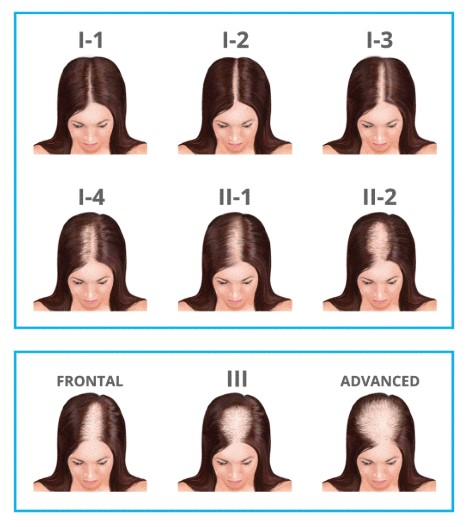
They’ll note the shape of your hairline and any areas showing signs of thinning or balding. Male pattern hair loss is an inherited condition, caused by a genetically determined sensitivity to the effects of dihydrotestosterone (DHT) in some areas of the scalp. DHT is believed to shorten the growth, or anagen, phase of the hair cycle, from a usual duration of 3–6 years to just weeks or months. This occurs together with miniaturisation of the follicles and progressively produces fewer and finer hairs. The production of DHT is regulated by an enzyme called 5-alpha reductase. If you’re genetically predisposed to this condition, these hormones can kickstart hair loss any time after puberty.⁶ What happens is that androgens shorten the hair growth phase, making the hair follicles smaller and the hair thinner and shorter.
Potential Causes of Hair Loss and Baldness
This activity examines when this condition should be considered in differential diagnosis, steps for evaluation, and treatment options. This activity highlights the role of the interprofessional team in caring for patients with this condition using different modalities tailored to individual needs and presentations. There are a variety of options in a practitioner's armamentarium for treating AGA which include oral and topical medications, hormonal therapies, nutraceuticals, PRP, exosomes, microneedling, and more invasive techniques such as hair transplantation. The treatment of AGA can be particularly challenging due to non‐uniformity in patient response to conventional therapies and even the incomplete understanding of the exact pathogenesis of the condition itself. Patients must adhere to lifelong therapy as AGA continues to progress if treatment is stopped.
This heightened androgenic milieu in the scalp contributes to the progressive miniaturization of hair follicles, leading to the characteristic pattern of hair thinning and eventual hair loss seen in androgenetic alopecia (see Image. Androgenetic Alopecia in Male). The human microbiota has evolved in tandem with its host and serves as an essential component of the human body. Acquired at birth, the microbiota matures alongside the host and maintains significance throughout life, impacting various bodily functions from infancy to old age (Adak and Khan, 2019).
Androgenetic alopecia can start as early as a person's teens, and the risk increases with age; more than 50 percent of men over age 50 have some degree of hair loss. This April marks Stress Awareness month in the US, a calendar moment designed to raise awareness of the pervasive and damaging nature of stress. While we know that stress is an undeniable factor in most people’s lives, its impact on so many aspects of our physical and mental health is perhaps more far reaching than we might imagine.
Outlook for People Undergoing Treatment for Androgenetic Alopecia
Available over the counter, minoxidil comes in versions designed for men or women. Dr. Browning recommends using a 5 percent formula; lower-strength ones won’t be enough, he says. When using it at home, avoid getting it on your forehead or above your lips — and anywhere else you don’t want hair to grow — he advises. From making comments about cancer to suggesting treatments that worked for friends facing hair loss, here are the top statements experts avoid voicing... Everyday Health follows strict sourcing guidelines to ensure the accuracy of its content, outlined in our editorial policy.
Male pattern baldness, a type of androgenetic alopecia (AGA), is the most common kind of hair loss and the type that comes to mind when we think of hair loss. AGA can affect up to 50% of the male population by age 50 and up to 80% by age 80. Although AGA is clearly inherited genetically, the exact pattern of inheritance is not well defined and is thought to be polygenic in nature, that is, comes from multiple genetic loci, or locations.
However, if you’ve noticed more strands falling out of your head than normal, you may be experiencing alopecia, the medical term for hair loss. Common diagnoses include androgenetic alopecia, alopecia areata, telogen effluvium, and lymphocytic scarring alopecia, Agbai tells USA TODAY. These treatments that emit red- or near-infrared light are believed to stimulate hair follicles to help hair grow, with a lower risk of side effects compared to topical creams and oral medications. Male-pattern hair loss is what causes a receding hairline and baldness in men. In women, female-pattern hair loss typically affects the crown or top of the head first, Mirmirani says. Women may notice that their part is becoming wider or that their scalp is more visible.
It’s usually genetic, but it can also be triggered by diseases or disorders that attack the hair follicles. When your body goes through something traumatic like child birth, malnutrition, a severe infection, major surgery, or extreme stress, it can impact your hair. Many of the 90% or so of hairs in the growing (anagen) or transitional (catagen) phases can actually shift all at once into the resting (telogen) phase.


No comments:
Post a Comment